
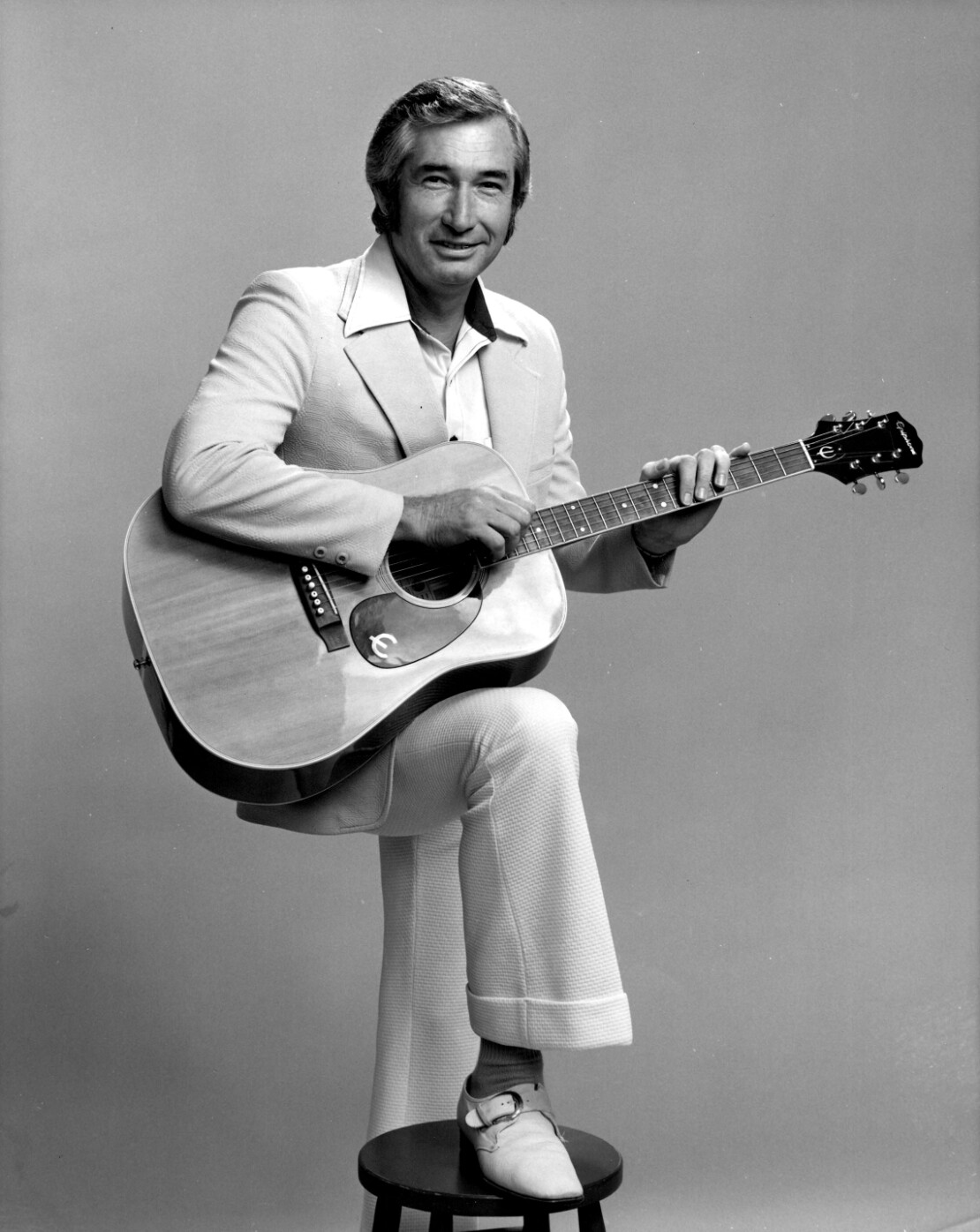
The greatest guitarist you’ve never heard of?
The story of Sonny Richter is a story about a man who was a remarkable musician, had an incredible journey to get there, but also valued his family, friends, and his faith.
Malcom Lafayette Richter was born on August 11, 1929, in DeFuniak Springs, Florida. He often joked that he either caused the depression or was a result of it. His father was a minister; his mother was supportive of his talents as a young man even though there were several other siblings that were also being raised. It seemed that from an early age he was going to forgo farming or working at his father’s gas station…those hands were going to be meant for something else.
His earliest musical memories were spent listening to the radio and the big bands of the era, but also country and pop-whatever caught his ear. And in a time when he would later say that guitar players were looked down on, that was exactly what he wanted to do. Charlie Christian would be an influence as well as Django Reinhardt. And because sheet music was not readily available, he would learn by ear.
Where he grew up also was of consequence; there were early encounters with Hank Williams as an example because Hank played through that part of the country a lot when starting including nearby Pensacola.
By the time he was 14 he had his first guitar-a Stella-and one story that was told was that he was mentored by two black men who lived nearby. They would teach him chords and tell stories that stuck with him. Eventually, his mother allowed him to move in with a couple of professional musicians in the area which was pretty remarkable! By the time he was 15 he was playing professionally, and had to sneak into clubs with fake ids and other methods to play gigs.
He had already done his first recordings by 1948 and had already started a restless pursuit of finding people to play with across the country. When he found himself in California playing with the Sam Nichols band (Sam was signed to MGM and Sonny did four sessions in 1949) he had already gone through Texas, Wyoming, and Montana.
In fact, it’s a dizzy, hard to follow history during the 50’s because all this occurred by 1954-he was in the USO as a musician, was on the Louisiana Hayride staff, played with T. Texas Tyler, Spade Cooley, Jimmy Bryant, Merle Travis, doing L.A. sessions and radio and t.v. appearances. Not to mention that all-black swing band (meaning Bob Wills kind of music) he recorded and sat in with in Texas. Or other really interesting experiences. We’ll come back to some of these stories elsewhere, but the man got around.
The first band we have extensive documentation on is the KBAR Ranch Hands, out of Burley, Idaho with George Ray Swink on rhythm guitar and lead vocals, “Jiggs” Arendell on steel, and Sonny on lead. The band was named after the local radio station KBAR, where George worked as a DJ, and the band would often play live on the air as well as playing locally and touring Nevada, Wyoming (at the famous Cowboy Bar in West Yellowstone) and the Pacific Northwest. They would play through 1958. More on the band here-
The next band would be The Western Gentlemen, also out of Burley, who also worked the same areas as the previous group, but much more extensively in Nevada at places like the Golden Nugget. Everyone took vocal leads in this band, but mostly those were done by Randy Stewart, accordion, Sandy Barker, rhythm guitar, Red Thompson, bass, and Sonny on lead guitar. They would stretch out even further musically, playing country, western swing, jazz-they could really do it all. More on the guys HERE:
Typically for Sonny, he was also splitting time with a band out of Oregon, The Sons Of The Golden West, who featured a legendary fiddle player (at least in the Northwest) Bus Boyk, and once again, this group, which had it’s roots as far back as the late 40’s, were eclectic and were molding influences from the Sons of The Pioneers to western swing and jazz. They recorded for Jimmy Wakely’s label, Shasta Records, and recorded 10 sides, six which also featured Sonny on guitar and harmony vocals. Group also included Sam White, lead vocals and bass, Paul Shilling, guitar, and Dave Yeary, rhythm guitar. More on the band HERE:
By 1960, Sonny’s time was winding down with the Sons, but also found himself for a short-lived but very exciting band fronted by Rocky Rauch, who had moved to Portland from Colorado where he had a long career fronting bands and had a very popular radio show as well. Sonny had moved to Portland by this time, and Rocky put together a band with old friend Jiggs Arendell on steel (Sonny and Rocky had both worked with him in previous groups); Bob Chester, drums, and Doug Woodall on sax. Rocky was a Wills devotee and in fact would work with him later in the 60’s. They were pretty fearless in pursuing western swing, country, jazz standards, and even things like ‘Good Rockin’ Tonight’. More on Rocky Rauch & The Rhythmaires HERE:
After that band broke up, Sonny moved with his family to Pismo Beach, California, where a venue called the Rose Garden had been booking artists from all over the country and it seemed like a good place to settle into. While Sonny would do sessions in Bakersfield and Nevada around this time, he mostly kept to the San Luis Obispo and Atascadero region for live gigs and any sessions through the 80’s.
During this time, he was able to play in a wide variety of groups and settings, allowing him to explore jazz, country, and whatever moved him. Probably the most extensive time was spent with a student he had mentored, Chris Scarbrough, and Chris had grown up to be an excellent player himself. The Silver Express was the main outlet for them and more on them here. He also played with the Monte Mills band.
Sonny and his wife Nancy left the area by the early 90’s and moved to Oregon to be closer to family and wind down-apart from a bit of touring with old friend Bill Bledsoe around that time, he had retired from live performance and recording, but kept playing and practicing every day, until his health finally started failing him. Sonny died on Feb 1st, 2014.
It is remarkable that he crossed so many paths with musicians who became really famous or were already so; many of these were close, personal friends and he probably should have been on that level for recognition, but he really never chased fame that hard-he avoided going to Nashville, for example, at the urging of Floyd Cramer in the 50’s because he “didn’t want to be told what to play”. Because of this singular path, Sonny was a musician others knew and admired, and the public never really were exposed to his talents like they should have been. It has been an ongoing project now for a few years to rectify that somewhat; a Facebook page, videos on YouTube, releases of archival projects, and now this website. I hope that having found this page, you’ll find much to enjoy and learn about this amazing player, who also happened to be my father.
Randy Layton (Richter) January, 2021